How to choose topics, write once, and earn traffic for years
Most blog posts fizzle after a few weeks, but evergreen content keeps working for you for months and even years. That’s the kind of marketing content small businesses need. This guide shows beginners how to pick topics that last and write posts that attract steady traffic—with examples you can steal!

What is evergreen content?
The easiest way to define evergreen content is to think of it as content that doesn’t “expire.” It remains in demand no matter the season or what’s happening around us; it’s always relevant and can be depended on to bring in a steady stream of new readers.
Evergreen content is:
✔️ Timeless
✔️ SEO-focused
✔️ Appreciated by its target audience
Evergreen topics vs evergreen content
An evergreen topic is one that has stable interest over time plus the corresponding search volume to go with it.
That means evergreen content is centered on and developed around an evergreen topic.
Let me explain.
🔎 Search intent stability: Are people asking the same question over time?
That simply means the information people want for your chosen keyword stays the same. For example, “how to potty train a puppy” always means that people want a how-to guide on this topic.
If, on the other hand, intent around that topic shifts, say from “compare models” to “find deals”, your post will feel irrelevant unless you update it.
🔎 Consistent query volume: Do people keep searching for it?
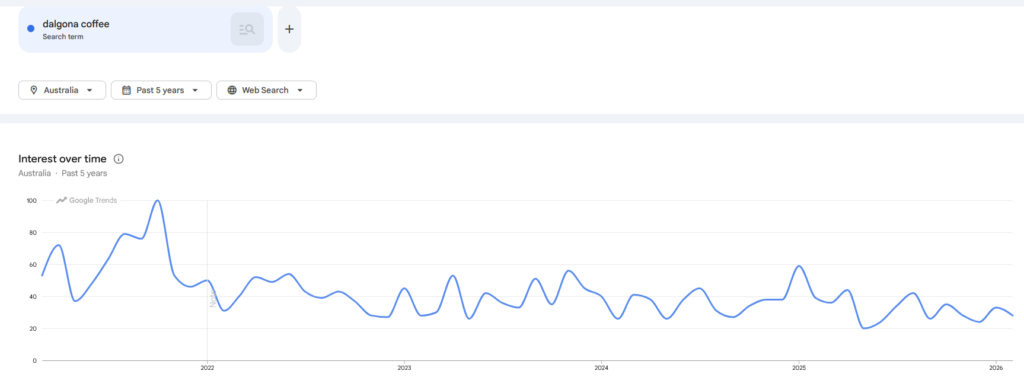
Here, you want to make sure that search interest for the term stays fairly steady over months or years instead of spiking and then slowly disappearing.
For example, “dalgona coffee” experienced a surge in interest around 2020-2022, but has been fluctuating downwards ever since.
💡 Practical application: Keeping with our puppy potty training example, for as long as we continue to welcome pets into our families, we’ll always want to learn how to stop our beloved puppies from doing their toilet business just about anywhere in the house. With that in mind, a blog post titled “5 simple steps to potty train your puppy in less than 6 months” would be an example of evergreen content resulting from the evergreen topic of “puppy potty training.”
What is the opposite of evergreen content?
If your content is a news article or related to the news cycle; about current events; trendy or fashionable; or statistics for a specific period of time—it’s not evergreen content.
For example: An opinion piece on your country’s election, daily updates on the coronavirus pandemic, a list of this year’s top 10 fashion must-haves, or “2017 social media usage statistics” are not evergreen content.
This type of marketing content may be timely and interesting for now (and perhaps sporadically in the future) but they aren’t likely to draw as much attention and traffic on an ongoing basis.
Quick note on timely content (hint: don’t dismiss it entirely)
By the way, this post is not here to say that non-evergreen content is useless!
In fact, timely pieces can drive fast spikes in traffic, generate social shares, and position your brand as current and responsive.
So, use timely content strategically, like when you need quick visibility, want to start/join a conversation, or to piggyback on a trending search.
Treat it as a complement to evergreen content to capture immediate attention, then funnel interested readers to evergreen resources that capture longer-term value.

Why is evergreen content important?
There’s a reason content writers work hard to develop evergreen content: the advantages are both far-reaching and substantial. Let’s take a closer look at the top five benefits of evergreen content.
⚡ Evergreen content helps you rank on search engines
Evergreen content (which, incidentally, usually happens to be long-form content) tends to do really well on search engines. In fact, this type of content can get you ranking for your desired keywords and search terms even in the long run.
⚡ It brings organic traffic to your website
Because you have a better position on search engines, your evergreen content brings more organic (non-paid) traffic to your website. And since evergreen content doesn’t expire or lose popularity, you can expect that post to bring consistent traffic throughout the years.

⚡ Evergreen content can generate important new leads
Content is a great way to introduce products and services to an already-interested audience—and spontaneously garner new leads for your business. But before that can happen, you need to get your pages in front of the right people. That’s where evergreen content can give you a significant advantage over competitors.
⚡ It earns you valuable backlinks
Backlinks (hyperlinks from other websites to yours) give you credibility—online and offline! Because when others link to your pages and materials, that signifies a vote of confidence for your content.
The nature of evergreen marketing content—timeless, always of interest, and normally in-depth—makes it particularly suitable for backlinks.
⚡ You’ll save time and money
This is an advantage everyone can appreciate! Rather than churn out 10 pieces of content per week to stay relevant, you can just focus on strategic evergreen content.

How do you create evergreen content?
By now, I know you’re convinced that evergreen content has to be part of your content marketing strategy. So what’s the best way to go about creating it? These steps will help you get started.
Step 1: Find evergreen topics
Your first step is to research relevant topics that have a long shelf life. As you can imagine, this task involves keyword, topic, and search stability research.
Here’s what you need to find out:
- Which keywords will be valuable for your site?
- What are people consistently searching for throughout the year?
- How stable have those keywords been over time?
- What’s their search intent?
- How can you tie those keywords to suitable content for your small business?
When you’ve done that you can now choose evergreen topics that readers want, that’s useful to your audience, and that serve your marketing goals!
Step 2: Decide on format
With your research out of the way and topics on hand, you now have to choose what kind of format to work with.
Evergreen content format ideas
- Case studies
- Product/service reviews
- Testimonials
- How-to guides
- Beginner’s guide
- Best practices guide
- Lists
- Checklists
- Top tips
- Tutorials
- Pros and cons/analysis
- Frequently asked questions
- Interviews
- Origin stories/“history of” posts
- Definitions, glossaries
You should, ideally, choose a format that (1) works well for the topic at hand, (2) is preferred by a wide audience, and (3) matches the intent.
For example, you might choose a how-to format for problem solving and case studies for social proof.
The great thing about evergreen content is that it can be repurposed, so you can later use the contents of a blog post for a long-form or shorts video, infographics, marketing emails, and more.
Step 3: Write your content
We’re finally at the fun part!
Once you’ve chosen a topic, built your keyword list, and chosen a format, it’s time to start writing.
There are a few things you should always keep top of mind when writing evergreen content.
✔️ Put in the extra effort to develop something unique.
There are a few ways you could do that.
- You could approach the topic from a different angle, like combining your how-to with local data or tying it to an uncommon use case. For example, “How to potty train a puppy in New York City: Techniques for apartment owners”
- You could include information, like statistics or research, that no one else has. For example, “The puppy potty training study: What 200 owners did that worked in just 8 weeks”
- Write the content from a distinctive point of view that only you can offer. For example, “Potty train like a trainer: A dog trainer’s playbook for reliable results”
As much as reasonably possible, the goal is to be offer readers something original that doesn’t already exist elsewhere on the web.
✔️ Avoid titles and language that can ‘date’ your evergreen content.
These include:
- Explicit dates and year markers: “in 2019,” “last quarter,” “as of 2024.”
- Time-relative phrases tied to the moment of writing: “recently,” “new,” “this month,” “last week.”
- Event- or trend-specific language: “during the pandemic,” “TikTok trend,” “election coverage.”
- Version- or product-specific references that change: “iPhone 14,” “WordPress 5.8,” software build numbers.
- Data or stats without context: “conversion rate increased 32% in Q2” (useful once, confusing later).
- Prices, promotional offers, or deadlines: “only $9.99 until June” or “register by May 10.”
- Faddish jargon or fleeting buzzwords: phrases that spike and then fade without wider meaning.
For example:
❌ Results from our 2021 potty training trial
✅ What a 200‑dog potty training trial taught us about achieving faster results
You can see how the first option limits your content to 2021 while the second is timeless.
✔️ Make it valuable.
This one’s self-explanatory. You want to create content that’s useful to your target audience. It should also be well-researched and well-written, so that it’s respected not just by your readers but by industry peers. (That’s how you get those precious backlinks.)
Step 4: Clean up your content
It goes without saying that content writing best practices apply!
- Have you checked spelling and grammar?
- Does your blog post have a logical flow and structure?
- Is your tone, voice, and style on brand?
Other things you’ll want to watch out for include:
- Are you using headings strategically?
- Is there sufficient white space?
- Have you included visual elements?
Last but not least:
- Add internal and outbound links where applicable.
- Include a clear next step if needed.
- Schedule relevant updates every 6-18 months depending on the topic.

Evergreen content creation strategies
To get the greatest return on your writing investment, here’s what you need to do.
⚡ Think of an eye-catching evergreen title
Evergreen content needs an evergreen title.
The best titles stand out on the search engine result page; they draw the reader’s attention and make the person want to click through to read more.
The rule of thumb is to make it interesting and different but not clickbait-y.
A few fail-proof formulas you can use include:
- How to [do X]: The complete guide
- [X] for beginners: What works and what doesn’t
- The [X] best [tools/techniques] for [audience/task]
- [X] A step-by-step plan for [outcome]
- The [name] method to [do X]
- [Common problem] – How to fix it (fast)
- Why [myth/common belief] about [topic] is wrong (and what to do instead)
- The ultimate checklist for [task/launch/process]
- [X] vs [Y]: Which is better for [audience/goal]
- What [data/experts] say about [topic]: Key takeaways for [audience]
⚡ Don’t be generic
For your content to stand the test of time, neither title nor content should be too generic.
A few tactics to beat being basic include adding a place, audience, price point, or time frame to your content.
For example:
❌ Where to get the best souvenirs
✅ Where to get the best souvenirs in Siem Reap for under $20
Here’s why:
- The generic (read: basic) title doesn’t get you excited;
- It doesn’t give you much insight into what you can expect (best souvenirs where?) or even much reason to click through;
- And it doesn’t indicate who this post is suited for.
On the other hand, the detailed title answers pertinent questions searchers have and therefore has a higher likelihood of appealing to your ideal audience.
⚡ Check in on your blog post
Revisit your evergreen content to make useful updates, add/remove links, or just to add even more value to the post for your readers.
You’ll want to update your evergreen content when:
- Traffic declines (it’s on a downward trend)
- New research is available and what you wrote is no longer up-to-date
- Product or price changes

Evergreen content ideas
Still not entirely sure what you could write about? Here are a few examples for different industries.
Examples of evergreen content for hotels and the travel/tours industry
- Definitive/mini/themed destination travel guides from your business’ distinct perspective and with your unique spin put on it
- Neighborhood walking guides
- All the must-try cuisine and regional variations in your destination
- Local festivals/cultural events and their histories: what every visitor should know
- Seasonal guide on what to bring or how to pack for your destination
- How to choose the right accommodation for your trip type
- How to plan a X-day itinerary for first-time visitors to your destination
Examples of evergreen content in the pet industry
- How to guides on topics like training, grooming, nutrition and overall pet care and ownership
- Pet product reviews for products under $X-amount
- The most common pet health conditions and how to treat them
- Pet breed characteristics, temperament and maintenance
- Rescue and adoption guides
- Choosing the right toys and enrichment for your pet’s age and breed
- Fun facts about your pet breed
Examples of evergreen content in the real estate industry
- How to guides for home buyers and sellers, e.g. How to stage your home and sell your house fast; staging a house on a budget; what to look for when buying a house for the first time
- Renting vs buying: how to do decide for your life stage and market
- First-time home buyer/seller checklists, guides, tips
- Definitions and frequently used real estate terminology
- Pros and cons of debated topics such as living in a condo vs house
- Home maintenance calendar: what to do each season to preserve value
- How to choose the right neighborhood
Examples of evergreen content in the healthcare sector
- Guides on the causes, symptoms, diagnosis and potential treatments of a condition or illness
- How to guides on relevant topics of interest according to your specialty / sector, e.g. How to eat healthy on a tight budget; how to read food packaging labels and what to avoid
- Top tips for healthy living with a certain condition
- Illness prevention guidelines
- How to prepare for your first visit to a specialist, questions to ask, records to bring
- Managing medication safely at home: a guide for patients and caregivers, storage and handling tips, etc.
- Navigating telehealth, e.g. how to prepare, what to expect, how to get the most from a virtual appointment
And there you have it – a few ideas to inspire you and get those creative juices flowing.

Need help coming up with evergreen content ideas then turning those ideas into blog content that actually performs?
Skip the long hours of brainstorming, keyword research and drafting! Let me plan your strategic topic calendar and write ready-to-publish posts that attract traffic and boost engagement with your brand. Book your FREE 20-minute discovery call today.