Skip these traps, reap the benefits
Most companies—95% of them—have brand voice guidelines, but only about a quarter actively apply them.
And when presentation slips, customers notice: 71% of businesses say inconsistent brand presentation confuses their audience.
The result? Polished visuals that don’t convert, mixed messages that erode trust, and marketing that feels forgettable.
Read on for the five brand-voice mistakes I see most often, what those oversights are costing you, and quick, practical fixes you can use today to avoid those pitfalls.
The brand voice mistakes you’re probably ignoring (but shouldn’t)
#1: Prioritizing visual identity over brand voice
This is when you spend most of your branding budget on design and visual elements (logo, colors, templates, and photography) while treating your wording as an afterthought.
The consequence of this brand voice mistake is that your site looks polished, but it feels interchangeable. Visitors don’t necessarily feel anything and they can’t tell who you serve.
Takeaway: Visual polish without a distinct voice often converts poorly. (And vice-versa; it’s a symbiotic relationship.)
For example, consider the before and after of this personal trainer’s website headline. Strip away all visual branding and you’ll see what a difference voice and copy make.
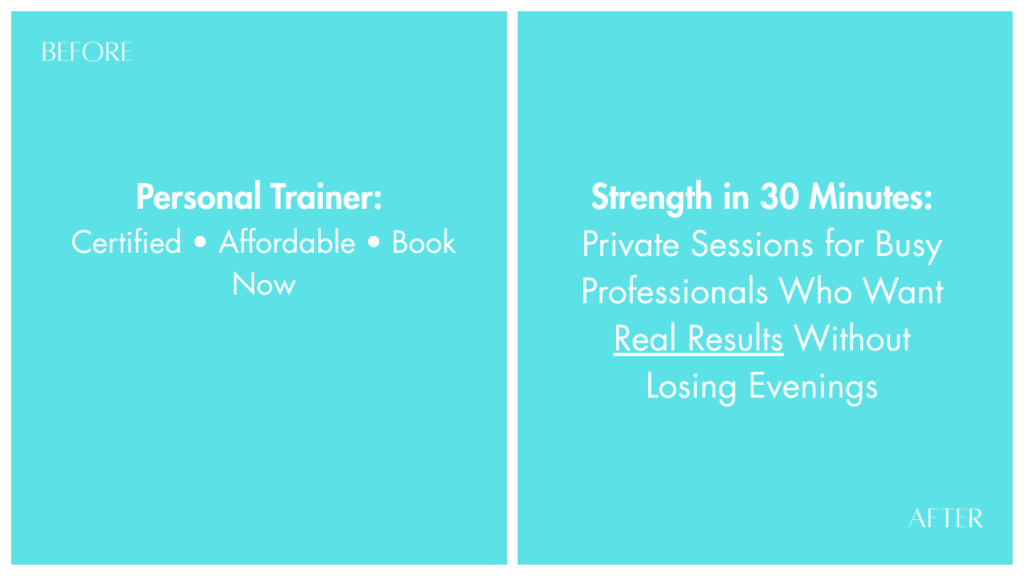
Before: Personal Trainer: Certified • Affordable • Book Now
After: Strength in 30 Minutes: Private Sessions for Busy Professionals Who Want Real Results Without Losing Evenings
Solution: Part of your brand’s identity is its voice, which means you need to invest just as much time figuring out what you want to sound like before you start writing or designing anything.
#2: Copying big brands
This is where you mimic the tone, phrases, and writing style of famous/successful companies or those you admire.
Why is this a problem, you ask? Well, when you copy others, what you write feels inauthentic and it’s actually confusing for your audience, who may be very different people than the customers of said big brand.
Takeaway: Imitation may be the highest form of flattery, but this brand voice mistake is also the best way to lose credibility and the quickest path to becoming forgettable.
Solution: First, know your customer base inside out. Who are they and what are their characteristics? You’re writing for them.
Next, make a list of adjectives that describe your top competitors followed by a list of adjectives to describe your brand.
Spot the differences?
That’s your reality check as to why you can’t and shouldn’t sound like anyone else but you.
#3: Inconsistency across channels
This is when your website, socials, emails, and ads all sound different. Some are formal, some chatty, some clinical, some funny—all very discombobulating.
This brand voice mistake causes customers to hesitate. They may question you (“who are you, really?”) or doubt themselves (“am I on the right page?”), neither of which lead to sales.
Takeaway: An unpredictable voice erodes trust and increases friction.
For example, consider this dental clinic’s social media caption versus website service description.

Caption: Hey friends! 🦷 Did you know a quick cleaning can keep small problems from becoming big ones? Stop by Pearly Whites for a relaxed 30‑minute appointment, gentle hands, and tips to keep your smile sparkling between visits. Book online or DM us — we’ve got evening slots this week! ✨

What are your thoughts? Is the voice consistent? Do they sound like the same dental clinic?
If you answered “no,” you’re right!
The social media caption comes across as warm, informal, and approachable—like people you’ve known forever. Here, the dental clinic used everyday language, emojis, and addresses the reader directly.
But the service description on their website is technical, precise, and rather detached. The focus is on medical terminology, indications, and what to expect, which come across as clinical and distant.
Solution: Develop brand voice guidelines that everyone must follow, so that the guy managing your socials and the marketer handling your website are always on the same page. (I can assist with that if you don’t know how to create your own.)
“Consistent” doesn’t mean identical, and “adherence” doesn’t mean rigid. It means everyone keeps your core personality in all communication, but allowing your tone to shift according to the situation and channel.
#4: Lax adherence to your brand voice across departments and platforms
Building on inconsistency, this is where you have an official brand voice guideline, but you don’t enforce your requirements.
This means teams revert to generic copy and write however they see fit, according to their voice and style—not the brand’s. They may even come across as unprofessional!
Takeaway: Your brand doesn’t gain distinctiveness or any of the benefits of brand voice consistency.
Solution: I recommend three things.
- Make sure every member of your team has a copy of your brand voice guidelines—and that they’ve familiarized themselves with it.
- Encourage them to have a post-it of your three personality adjectives right by the computer monitor, so they know exactly how to sound regardless of channel.
- Don’t forget to regularly audit your customer-facing copy to make sure everyone’s staying “on brand.” If you spot inconsistencies, edit, edit, edit!
#5: Brand voice complacency
This brand voice mistake is where you stick to what you’ve always done even when you know it isn’t working; even as you grow and the business environment evolves; or when your target market changes.
The consequence is that your voice may be stale or misaligned with new audiences. Copy may fail you on new channels (chat, SMS, ads) and you may miss new opportunities.
Takeaway: Adjust and adapt as needed.
Solution: Talk to customers as often as possible! Ask your sales team to take note of the language prospects and clients use to describe your brand and monitor what they’re writing about you online. The idea here is to be guided by what real people are saying and how they’re reacting to your marketing materials, not what you think or thought (when you were getting started) works best.
Why this matters for small businesses (and what to do next)
For small businesses and solopreneurs, these voice mistakes aren’t just “cosmetic” issues – they’re costly.
An inauthentic or forgettable brand loses leads, wastes ad spend, and confuses customers. Correcting course is usually faster and cheaper than living with the slow leak of inconsistent messaging.
If you’d rather skip the guesswork, let me audit your messaging or create a one‑page voice guide for your team. Book your FREE 20‑minute discovery call today.