A pet product packaging copywriting how-to for small businesses
📈 The pet products and services industry is thriving
Global pet ownership is rising, and with it, pet-related spending and the number of pet-focused businesses.
Even in a crowded, multi-billion-dollar market, hundreds of new brands launch every year as demand expands and niches multiply.
But here’s where things get complicated: more products on the shelf means less attention per product.
Whether in-store or online, customers rarely read first.
They glance, compare, feel something, then decide whether to keep looking.
That matters for small pet businesses because it means your product is judged in seconds. And while a striking design earns the pick‑up, persuasive packaging copy turns that 3‑second glance into interest—and a purchase.
So, as a small business, or new entrant in this industry, what should you do to make your product stand out? How do you get your products to fly off shelves?
In this article, I’ll walk you through:
- The importance of pet branding for small business;
- Why packaging copy is a big deal in the pet industry;
- How to write successful pet product copy;
- Examples to demonstrate what we’re talking about, including what works vs what fails;
- Surprising statistics and what they mean for your business.
🛒 The long journey from shelf to the checkout counter
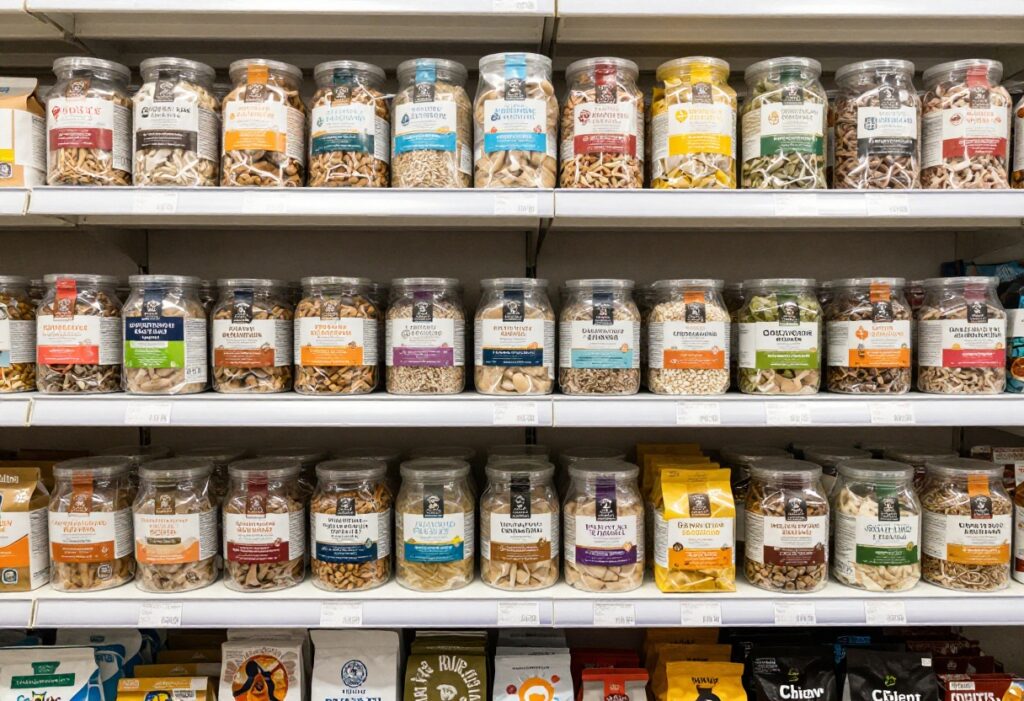
Pet aisles are crowded. Food, supplements, tech, grooming items, toys, accessories—every shelf screams for attention.
Think every shape, size, color, font, and adorable faces of smiling pets competing for the same second of a shopper’s time.
I say this as a pet parent: it’s overwhelming!
As a marketer, getting your product from shelf to cart then all the way to the checkout counter in such an environment is not easy.
It’s a multi-step process that begins with standing out, so that pet parents pick the item up in the first place.
Then once a product is in the shopper’s hands, it’s the packaging copy that sells it.
🧠 Why pet branding matters especially for small businesses
Branding is key for small pet businesses that want to compete with big-budget industry giants.
And by branding, we’re not just talking about design elements, like your logo, font and color choices.
We’re also talking about how you choose to present yourself in words—your voice, tone, and writing style.
Here’s why pet branding matters when you’re just getting started.
👉 You’re not competing on product, you’re competing on perception
In today’s pet industry:
- Many products are manufactured in the same facilities
- Ingredients and formulations are often very similar or sourced from the same suppliers
- New brands can launch quickly via white-label suppliers
So the real difference comes from what people believe about your product.
That belief = your brand.
⚠️ You obviously still need a really great product! Even if you manage to convince the consumer to purchase your product, if it’s low quality, the pet doesn’t like it/falls ill, or there are numerous recalls and bad reviews online, that would have been the first and last purchase ever.
👉 Pet owners don’t buy logically, they buy emotionally
The pet industry is driven by one undeniable truth: people see pets as family.
That means you’re not just selling dog food, shampoo, and toys. You’re selling care, love, responsibility—and identity! (“I’m a good pet parent.”)
Branding is what connects your product to those emotions.
Without branding, you’re indistinguishable; just another item on the shelf.
👉 Small brands don’t have scale, so they need clarity
Big companies can rely on advertising, a wide distribution network, and brand recognition.
Small companies can’t.
Instead, they win by being clearer, more specific, more relatable.
For example, plain old “dog food” is forgettable. But “gentle nutrition for senior dogs with sensitive stomachs?” Now that’s memorable.
Such strategic positioning is branding.
👉 A crowded market punishes “generic”
Listen, thousands of businesses plus tens of thousands of products means generic brands disappear.
This is especially true for pet food, supplements, and accessories, where products look very similar on first glance.
Branding defines what you stand for.
Copywriting is how customers understand it.
💲 Your branding is tested at the point of decision
Branding is built across many touchpoints and channels yet it’s proven at the point of decision, either in the form of a purchase, booking, or sign up.
And in the pet industry, those decision points are:
- Physical packaging (in-store)
- Product page copy + visuals (online)
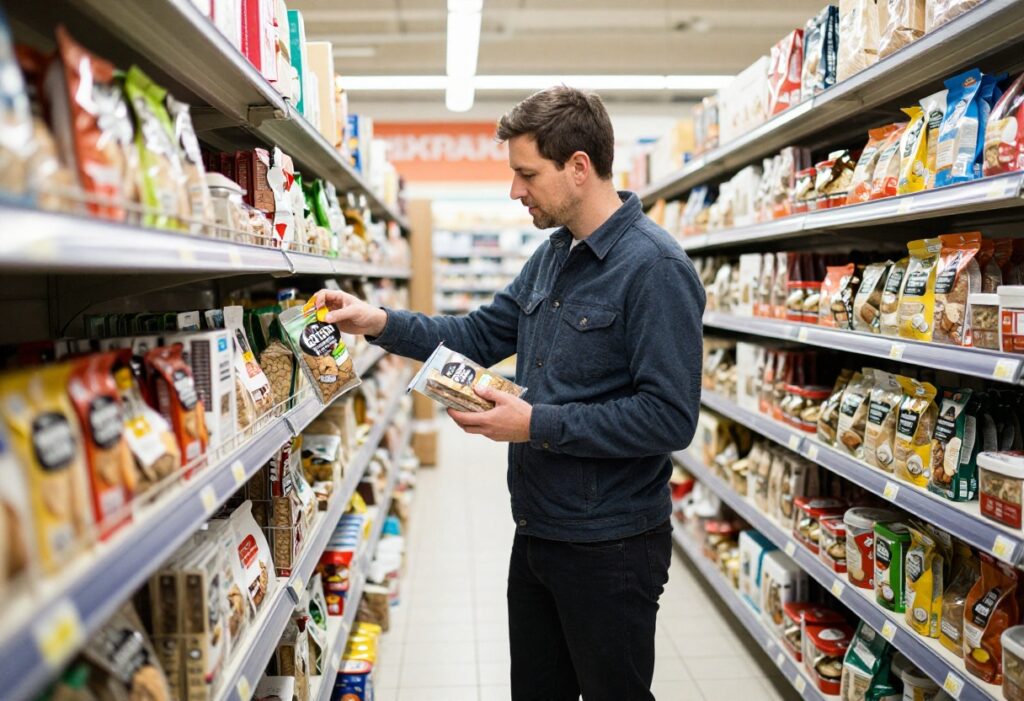
Imagine two dog collars sitting side by side on a shelf.
One simply says: “Durable.”
The other offers a five-year warranty and explains, in one line, what it’s made of and why that matters: “Built for active beach dogs: Marine-grade webbing • Corrosion-resistant clip • 5-year warranty”
They may be similar in quality but I guarantee you they won’t be perceived the same way.
💭 Packaging influences perception
Because, in that split moment of decision-making, perception is what drives the purchase. But decision-making is surprisingly demanding in the pet industry for a few reasons:
👉 Emotional proxy buying
Pet parents aren’t buying pet products for themselves. They’re choosing on behalf of a fur, feather, or scaled companion they care deeply about. That emotional element is critical in the pet industry!
👉 Premiumization raises the stakes
As more products position themselves as “premium,” prices rise, and with it so does skepticism and comparison.
Shoppers need immediate answers to:
- Why is this better?
- Why is it worth the price?
- Why should I trust it?
Buzz words and cute images won’t cut it. Small pet food brands must approach their packaging’s text strategically.
👉 New niches need new education
Fast-growing categories like supplements, fresh/specialty food, and pet tech aren’t always fully understood by customers.
That means the text on your packaging has to do double-duty: explain + persuade. All that in just a few words and with very limited space!
⚡ Strategic copywriting is a force multiplier for your small business
With thousands of similar products on the market, small differences in how value is communicated can determine which product gets picked up—and which gets ignored.
Even an excellent product will lose if its message is muddled.
That’s where strategic pet copy multiplies the impact of everything you already do as a small business.
While you may not have a giant budget or worldwide distribution, smart copy:
✅ Builds trust quickly
✅ Justifies higher prices
✅ Increases conversions
That makes professional copywriting one of the highest-leverage tools available to you right now. Make sure you use it!
Sometimes, the solution ISN’T more work.
It’s a clearer perspective on what to say and how to say it.
If writing this kind of copy feels harder than it should, let’s talk. I work with small pet brands to sharpen messaging and lift sales. Turn your product story into copy that converts today.
🔥What great pet packaging copy actually does
The best-performing brands consistently hit these three layers with their copy:
👉 Instant clarity
What is this? Who is it for?
In a crowded aisle—or a fast-scrolling product page—shoppers don’t have time to figure things out. Great packaging copy removes confusion immediately.
Strong brands make it obvious:
- What the product is
- Who it’s for
- Why it’s relevant
Compare:
- “Premium Dog Food”
vs - “Grain-Free Kangaroo & Crocodile Recipe for Dogs with Sensitive Stomachs”
Notice how the second doesn’t just describe the product? It identifies the customer.
Takeaway: clarity reduces hesitation, and less hesitation means faster decisions.
👉 Specific benefit
What does this actually do for my pet?
Broad claims get ignored because every product makes them.
Phrases like:
- “High quality”
- “Nutritious”
- “Supports health”
…don’t differentiate anything.
Strong copy, on the other hand, focuses on tangible outcomes:
- “Supports healthy joints in senior dogs”
- “Reduces shedding in 4–6 weeks”
- “Gentle on sensitive stomachs”
Specificity does two things:
- It makes the product feel more credible
- It helps the buyer quickly decide if it fits their exact need
Takeaway: in a saturated market, specific beats generic every time.
👉 Trust signal
Why should I believe this?
Trust is everything.
So great packaging copy doesn’t just make promises. It backs them up with signals like:
- “5-year warranty”
- “Vet-recommended”
- “Made in Australia”
Even small details—like mentioning where materials come from—can dramatically increase perceived credibility.
Takeaway: trust signals turn claims into convictions.
⚠️ These signals only work if they’re accurate and verifiable. Overstated or misleading claims may win attention in the short term, but they quickly erode trust, especially in a category where safety and well-being are paramount.
When these three layers are present in your packaging copy, they create momentum. In turn, customers don’t just understand the product—they feel confident choosing it.
🖊️ How to write successful pet product packaging copy
When it comes to decision-making, customers ask questions without even realizing it. The job of your packaging copy is to answer those questions clearly, quickly, and convincingly. This checklist will help you.
Positioning & focus
What is the single most important thing this product stands for?
If everything feels important, nothing stands out.
If you try to say everything, you end up saying nothing.
So your first task is to pick your lane and commit to it.
Once you’ve chosen your lane, it will influence:
- Your headline
- The benefits you highlight
- The tone, voice, and style of your writing—including what you choose not to say
For example, are you:
- Premium quality?
- Performance-driven?
- Playful and fun?
You don’t need to be all of these. In fact, you shouldn’t be. But you do need to figure out your positioning before you start writing.
Here are headline examples for a brand of pet harnesses.
💎 Premium: Comfort meets craftsmanship
🏆 Performance: No-pull design for smoother walks
🐶 Playful: For dogs who lead the adventure
Notice how each version emphasizes a different outcome, and speaks to a different kind of buyer? That’s what “picking your lane” looks like.
In practice: if a customer glanced at your packaging for just a few seconds, what would they remember? One clear idea or a mix of vague promises? If it’s the latter, your positioning isn’t sharp enough.
Brand DNA
What are your brand’s 2–3 most important attributes?
Your brand attributes define how your positioning feels, so you need to decide these before you start writing.
For example, are you:
- Clinical and science-driven?
- Bold and confident?
- Playful and expressive?
Think carefully, because the adjectives you choose will shape your brand voice.
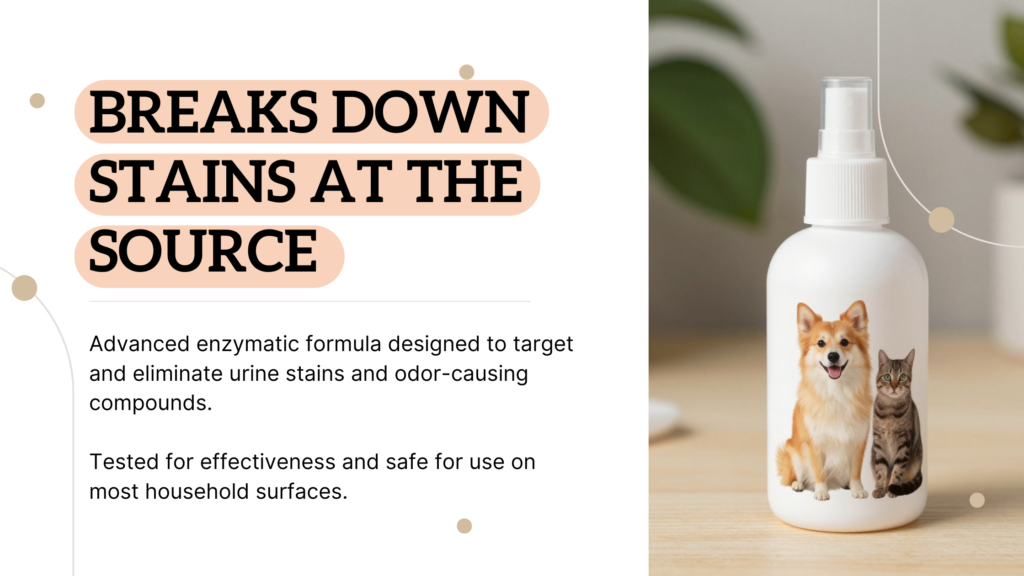
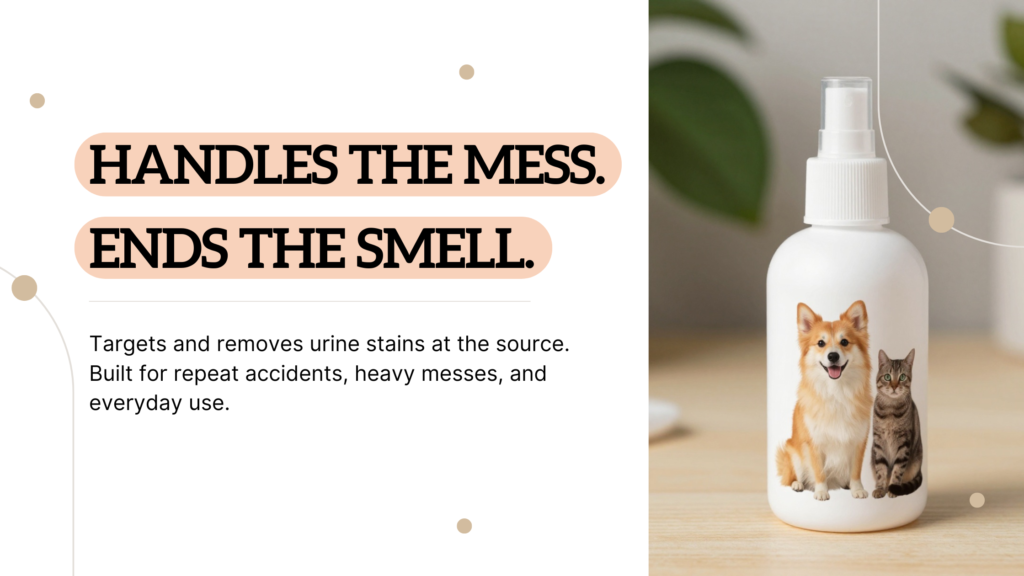
To put that into perspective, here’s what packaging copy for a urine stain and odor remover brand might look like.
🧪 Clinical and science-driven:
💪 Bold and confident:
🐶 Playful and expressive:
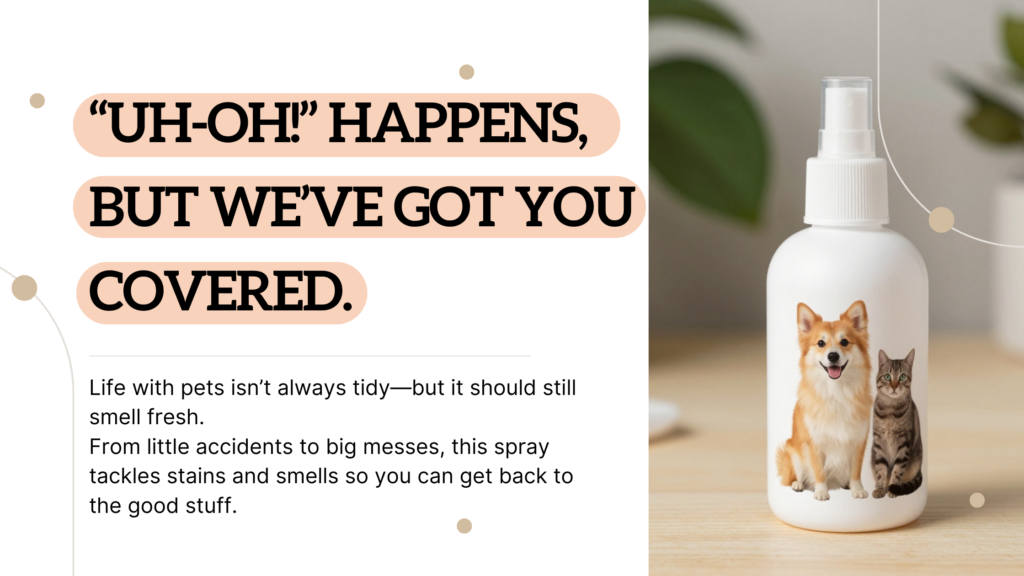
Notice how we’re describing the same product with the same purpose, and yet there’s a completely different voice? That’s because your chosen attributes will influence:
- Phrasing
- The tone and rhythm (cadence) of your writing
- The vocabulary you use
- How formal or casual your copy feels
In practice: if someone reads your packaging without seeing your logo, can they instantly tell what kind of brand you are? If you’re neither here nor there, you haven’t got your brand DNA down just yet.
Customer clarity
Who is this product really for?
The better you know your customer, the more relevant and convincing your message becomes. And the more convincing the message, the easier it is for someone to recognize: “This is exactly what I need.”
On that note, are you writing for:
- First-time pet owners?
- Experienced pet parents?
- People dealing with a specific issue?
Define your audience and what they care about.
All that will influence:
- The problems you highlight
- The benefits you focus on
- The language you use
Just remember that your customer and positioning should align.
For example, going back to our dog harness:
💎 Premium → pet parents who prioritize quality and comfort
🏆 Performance → pet parents dealing with pulling or control issues on walks
🐶 Playful → owners who see walks as fun and view accessories as opportunities to express oneself
In practice: complete this sentence: “This product is for [specific type of customer] who needs [specific outcome].” If that sentence feels broad or generic, your packaging will be too.
Core product features
What does your product actually do?
Features are the tangible building blocks of your product. They’re not the headline, but they support your main promise and give it credibility.
Think:
- Materials (e.g., breathable mesh, food-grade silicone)
- Construction (double-stitched seams, leak-proof fabrics)
- Functionality (adjustable straps, water-resistant design)
What does your product have or do better than any other option on the market?
Make a list of all your features; make it measurable, tangible, or time-bound.
For example, let’s say you make heavy-duty dog beds specifically designed to withstand destructive habits like chewing, scratching, and marking behavior.
Saying your bed is “high quality” is vague.
But when you describe why it’s high quality (“triple-layer, tear-resistant fabric”), that’s something a customer can picture—and understand.
In practice: if you removed a certain feature, would the product meaningfully change?
If yes, it’s worth including. If not, it’s likely filler.
Product outcomes
What changes for the customer (or their pet) after using this?
This is where features turn into something concrete, something of value or meaning for the customer.
For example, customers don’t buy “adjustable straps.”
They buy:
- Easier walks
- Safety and injury prevention
- Calmer, happier dogs
So instead of just listing what something is, connect it to what it does in real life. Since you’ve got limited space on packaging, you want to compress this into a single, tight phrase.
For example:
- “Gentle on your dog’s joints”
- “Tangle-free walks”
- “Full-wrap padding with a moisture-wicking lining”
In practice: people don’t buy products—they buy better moments, easier routines, and solved problems. If you’re not making life easier for the buyer, you need to go back and reevaluate your product’s benefits.
Removing friction
How can you address hesitations?
Every purchase comes with tiny doubts:
- “Will this fit my dog?”
- “Is this safe?”
- “Is it worth the price?”
Great packaging doesn’t ignore these questions; it answers them.
This can look like:
- Sizing clarity (“Fits small to medium breeds”)
- Safety reassurance (“Non-toxic”)
- Ease-of-use cues (“Ready in seconds”)
- Maintenance info (“Machine washable”)
You’re not adding more text for the sake of it—you’re removing reasons not to buy.
In practice: the fastest way to increase conversions is to reduce uncertainty. If you’re not de-risking the decision, you’re not done writing.
Trust and proof
Why should someone believe your claims?
Anyone can say “best,” “premium,” or “high quality.” But selling only follows when you back those claims up. On packaging, this often means quick, credible signals like:
- Certifications (organic/non-GMO, vet-approved, lab-tested)
- Specific numbers (“10,000+ happy customers”)
- Awards or recognition
Online, you’d add testimonials or reviews to your product copy page.
If you’re just getting started in this industry, you might be worried that there’s not much to say just yet. But let me tell you something I’ve learned as a strategic copywriter: the smallest, seemingly insignificant details can build trust!
For example:
✔️ “Developed with K9 trainers”
✔️ “Tested on active dogs”
✔️ “Made in [your country]”
In practice: belief is built on evidence, not adjectives. What kind of convincing would you need before buying this? If you don’t have proof, use something else.
Keywords & discoverability
What should go on the box?
Whatever the product—whether it is canned or dry dog food, medicated dog collars or herbal pet shampoos—your space on the box is limited.
Instead of asking, “What sounds nice?” ask, “What needs to be here?”
But there’s a second layer to all this: your packaging doesn’t just live on a shelf—it lives online.
The same words on your packaging often show up in product listings, product landing pages, and even social media posts.
That means your word choices affect not just clarity; they also affect SEO and discoverability.
Research how your target customer actually searches for things, whether that’s in stores or online. For example, “puppy teething toy,” “slow feeder bowl,” or “hypoallergenic dog shampoo.” They work just as well on packaging as they would online.
Now consider the following:
✔️ “No-pull dog harness” vs “ergonomic canine walking system”
✔️ “Slow feeder bowl” vs “paced nutrition dish”
✔️ “Quick-dry dog towel” vs “innovative post-bath essential”
One is clear and searchable. The other is… creative, but … uh, who uses that kind of language?
In short:
- Use familiar, intuitive language
- Name the product clearly
- Reinforce important terms
In practice: the best packaging copy doesn’t just sound good—it makes your product easy to find, easy to understand, and easy to choose. That means, if you’re not using the language your customers actually use, then you’re not doing it right.
Legalities
Have you included all legally required information?
Most countries mandate legally required information, specifically for pet food. Sometimes, these pet food packaging label requirements can also vary from province to province.
You’ll typically need to include the following:
- Product Name
- Net Quantity Statement
- Manufacturer and Distributor’s Name and Address
- Ingredient List
- Guaranteed Analysis
- Nutritional Adequacy Statement
- Feeding Directions
- Calorie Statement
- Country of Origin
- Safety Warnings
So, make sure that your pet product packaging copy follows all the labeling rules of your home country and/or the rules of countries you’re exporting to.
Visit the FDA or FEDIAF good labeling guidelines for more information.
In practice: these labeling legalities aren’t “nice to have”—they’re mandatory. And while they may not be the most exciting part of your packaging, they still shape the overall experience, including building trust, so don’t overlook them.
📌 The long and short of it all
The pet industry isn’t just growing—it’s massive, competitive, and shoppers are emotionally driven. Here’s an overview of some crucial pet industry stats, and what they mean for your small pet business.
🌎 The scale is enormous
Globally, pet ownership is widespread and still growing.
Some quick snapshots:
- The United States alone has nearly 70 million dogs and 74 million cats
- China, Russia, Japan, Brazil, France, and the Philippines all have tens of millions of pets each
- Europe counts around 75 million pet cats and 75 million pet dogs
💡 What this means for you:
A large market doesn’t guarantee attention; it makes attention harder to earn. And that’s why packaging copy matters.
💶 The spending is staggering
Pet parents don’t just own pets—they invest in them.
- Total pet industry spending reached $95.7 billion
- $36.9B on food and treats
- $29.3B on vet care and product sales
- $19.2B on supplies and OTC products
- $10.3B on services
- $21B on pet food
- $8.7B on accessories
- $11B on services
The US, UK, France, Switzerland, and Germany lead in per-person pet spending.
💡 What this means for you:
People are willing to spend, but only if they trust what they’re buying. Your copy needs to justify the purchase quickly and convincingly.
🤼 The competition is real
This is where things get more challenging for small brands.
- The US alone has an estimated 630 pet food and treat brands
- The EU has 130+ companies and 200 production plants
💡 What this means for you:
You don’t just need a great product, you also need strategic copy. Because the brands that win are the ones that are instantly clear, simplest to understand, and easiest to trust.
All this to say: you’re competing in a crowded, high-stakes market for attention and trust—your marketing and packaging copy must be up to the task.
Your product is solid but your messaging isn’t quite landing?
A few small changes can make a BIG difference! 💯
If you want a hand refining your pet content, feel free to reach out to explore your options.